Sakarya University offers courses accessible to the community and individuals outside the university through its continuous education center.
Through its lifelong learning services, Sakarya University provides access to educational resources for those not enrolled at the university by offering various educational programs, organizing public events, and sharing the university’s knowledge resources with the public. The trainings conducted by the Sakarya University Continuous Education Center (SAÜSEM) include professional training, technical training, and certification programs, as well as short courses for individuals who do not attend the university.
The Sakarya University Continuous Education Center (SAUSEM) conducts over a hundred training and certification programs aimed at entrepreneurs and individuals seeking to develop or acquire new skills.
Sakarya University supports lifelong learning and contributes to local development by providing accessible, inclusive, and sustainable educational opportunities for all segments of society. The Sakarya University Continuing Education Application and Research Center (SAÜSEM), operating within this framework, offers a wide range of certification programs to strengthen individuals' professional development, social inclusion, and employability.
The training programs featured in the image include Family and Religious Guidance Office Consultancy, Bank Personnel Basic Training, Deep Learning and Computer Vision, DHBT Preparatory Training, Job and Vocational Counseling (Level 6), Basic Sign Language Training, Anti-Mobbing Unit Officer, NLP Master Practitioner, Chess Training, and Basic Breathing Training, all of which develop both social and technical skills.
Through these activities, the university contributes to achieving the goals of quality education (SDG 4), decent work and economic growth (SDG 8), and reducing inequalities (SDG 10). These comprehensive programs, carried out by SAÜSEM, are a concrete reflection of Sakarya University's vision to provide inclusive, applicable, and sustainable learning opportunities for different segments of society.
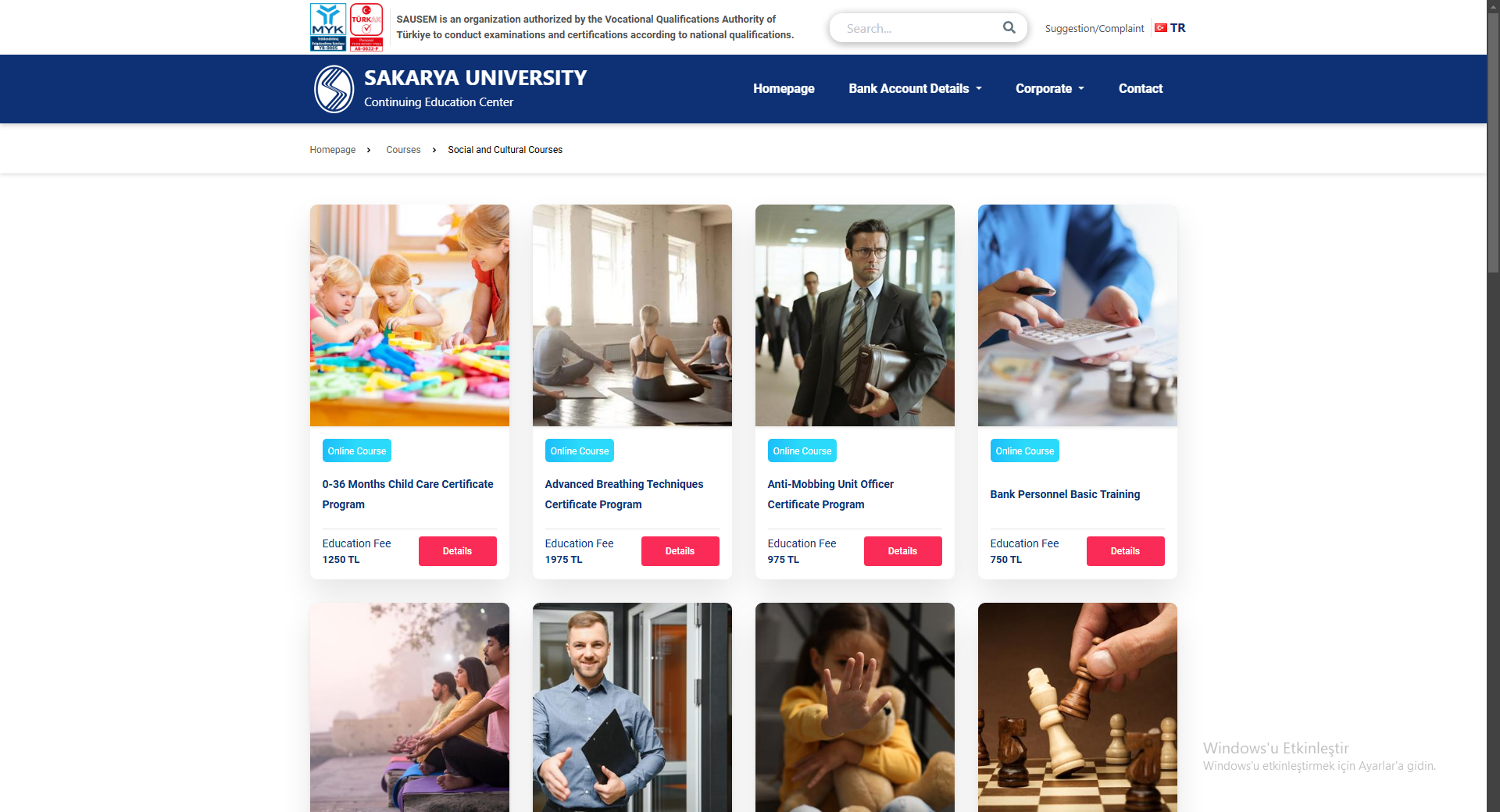
Sakarya University conducts lifelong learning and inclusive education activities not only for its students but also for all segments of society. Operating within this framework, the Sakarya University Continuing Education Application and Research Center (SAÜSEM) reaches a broad audience, including alumni, residents, employees, and disadvantaged groups.
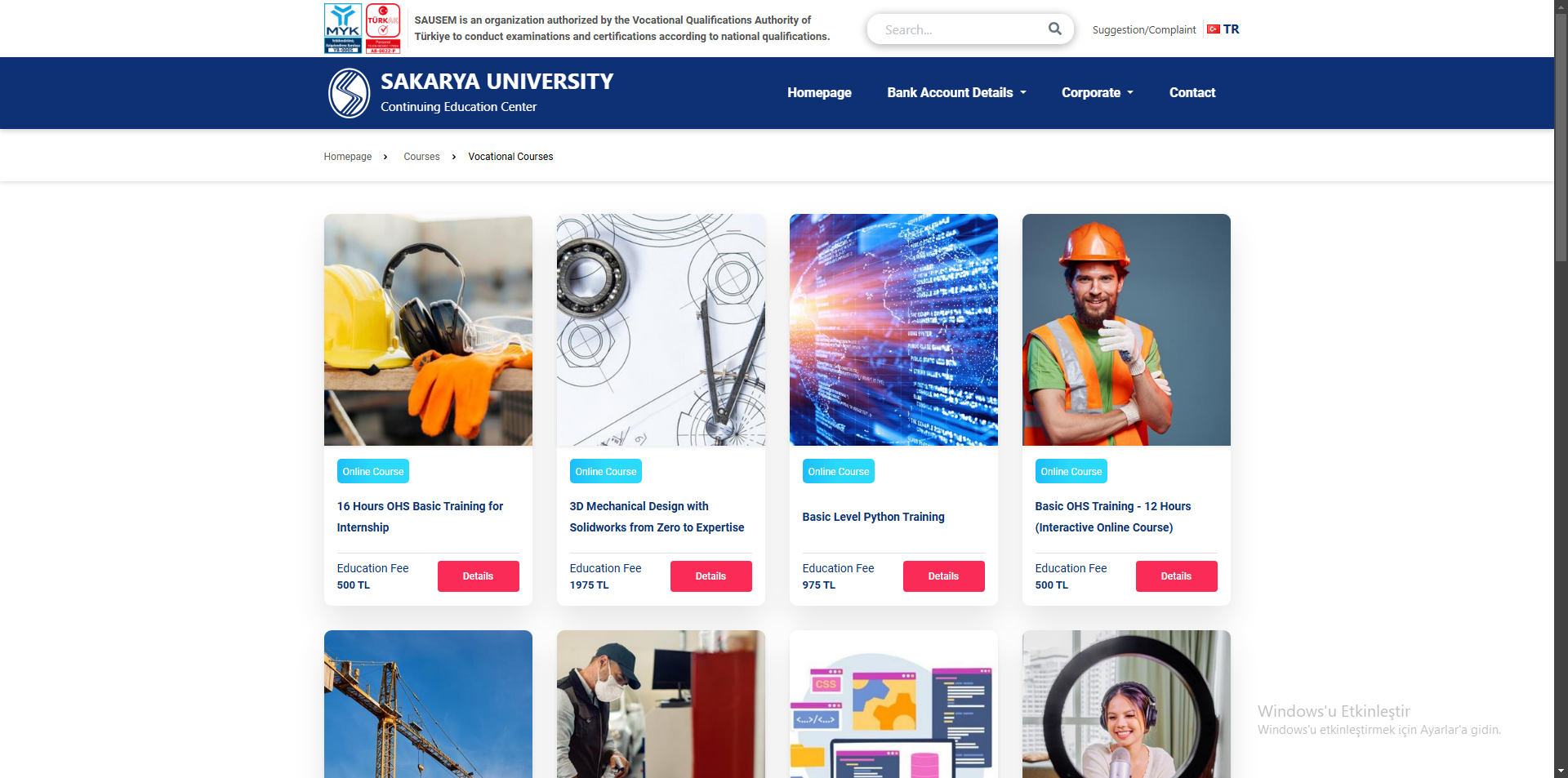
The center's social, cultural, technical, and vocational certification programs aim to enhance participants' individual development, professional skills, and social awareness. Programs include training for a variety of ages and professions, such as Digital Content Creation, Database Querying with Python and SQL, Occupational Health and Safety, Hygiene Training, Fire Safety, Time and Stress Management, 3D Mechanical Design with SolidWorks, and Natural Gas Firefighting.
These activities offer reskilling and employability opportunities for alums, local communities, employees, and job seekers. Thus, Sakarya University presents an exemplary university-community collaboration model that strengthens social inclusion, aligning with the goals of quality education (SDG 4), decent work and economic growth (SDG 8), and reducing inequalities (SDG 10).
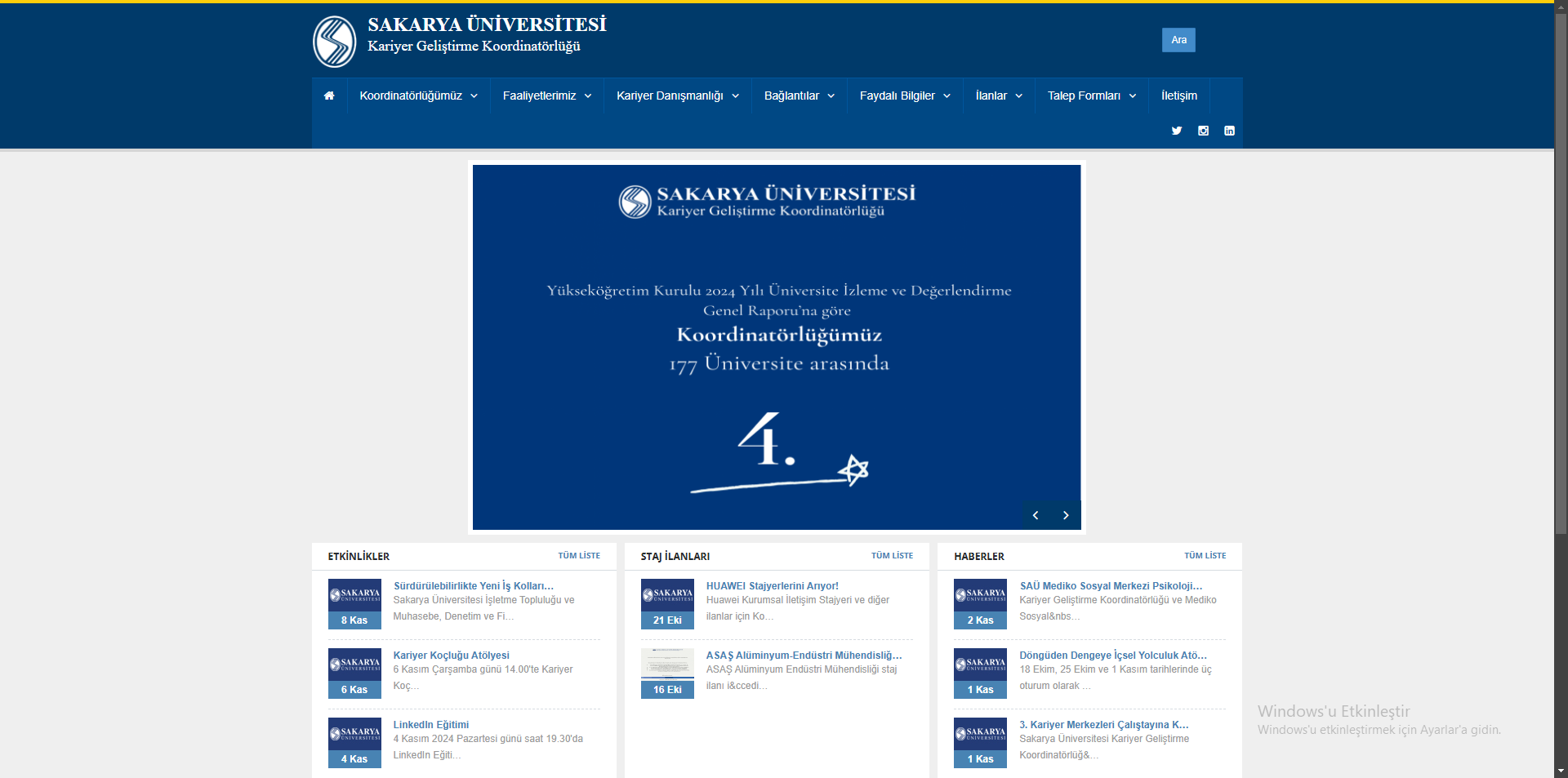
The Career Development Coordination Office engages with students and maintains communication and collaboration with alumni after graduation to accompany and support them throughout their career journeys by carrying out the necessary activities.
In this context, to help students and alumni make informed decisions about their careers:
It aims to support them in areas where they need assistance, such as:
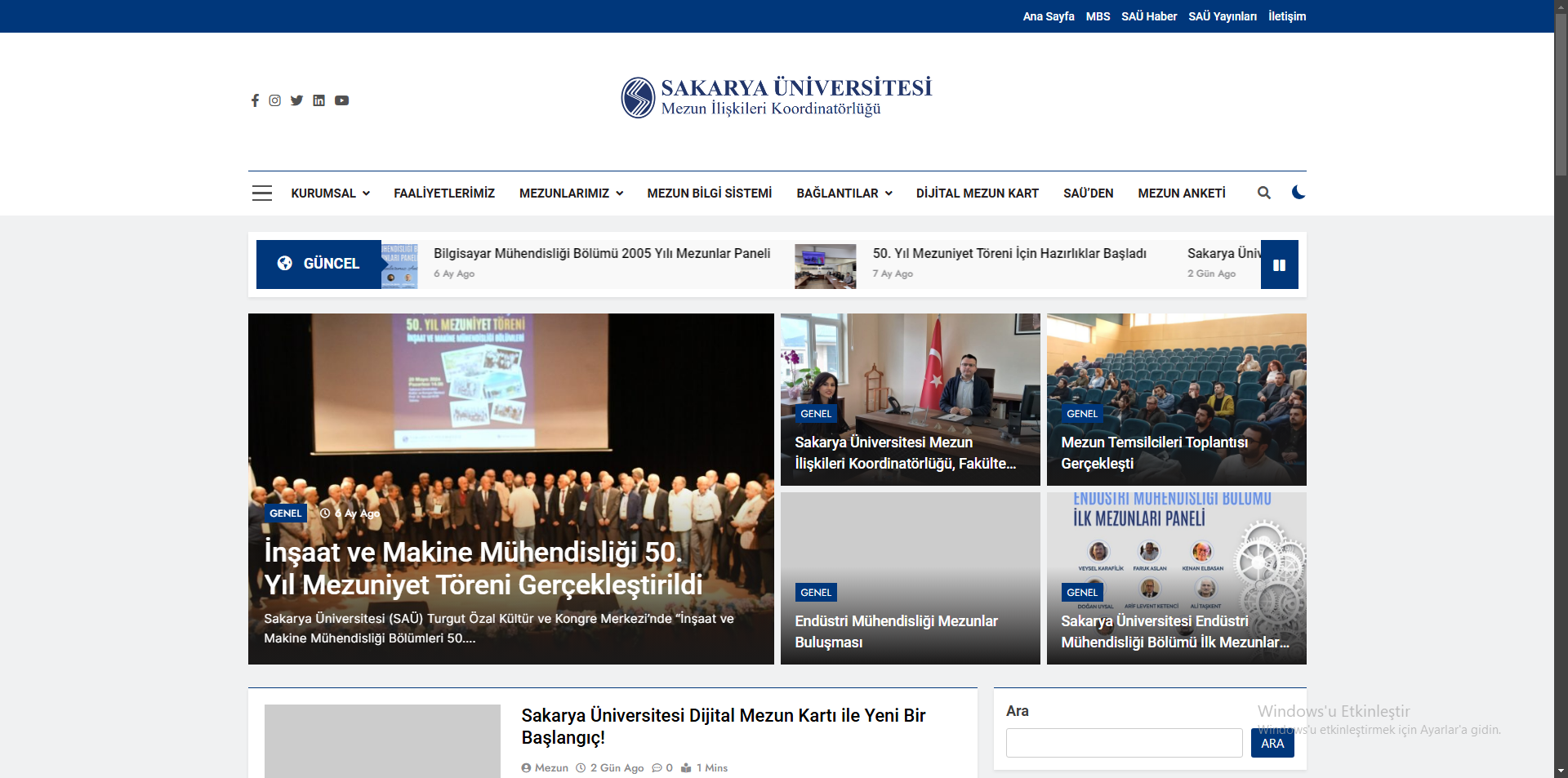
The Alumni Relations Coordination Office aims to establish a strong bond with its alumni, who are part of the university’s rich heritage. It works to support its graduates in their post-graduation lives, enrich their experiences, and bring them together to form a strong alumni community.
The Youth and Volunteering Course is being launched at Sakarya University.
Based on a comprehensive cooperation protocol between the Ministry of Youth and Sports and the Council of Higher Education, aimed at promoting youth activities and developing volunteer activities, the ‘Youth and Volunteering’ course with the course code SAU 501 has been introduced as a university-wide elective course at our university starting from the 2023-2024 academic year. The course aims to strengthen the ties between the university and the community by enabling students to use the knowledge, skills, and experiences they have gained throughout their education. Students will participate in various volunteer activities to gain awareness of various issues and problems in society, such as migration and disasters, disabilities, and disadvantaged groups, among others.
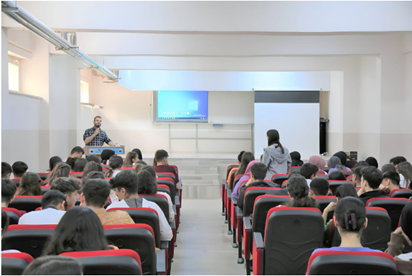
“Kindness and Volunteering Movement” Seminar Held at Sakarya University
Sakarya University (SAU) organizes awareness-raising events with broad participation to promote a culture of volunteerism and strengthen social solidarity. In this context, a seminar titled "The Kindness and Volunteer Movement" was held at the SAU Turgut Özal Culture and Congress Center.
The event was organized by the In-Service Training Branch of the SAU Human Resources Department and was attended by university staff, academics, and administrators. Participants received practical information on topics such as empathy, effective communication, project management, creating solutions to social problems, case studies, and environmental awareness. Plans for expanding volunteer activities through digital platforms were also shared.
This event reflects Sakarya University's vision of fostering a culture of social responsibility, solidarity, and volunteerism, in line with the goals of quality education (SDG 4), peace, justice, and strong institutions (SDG 16), and partnerships for the purpose of achieving the Sustainable Development Goals (SDG 17).

Awareness Event on “Perception of Disability and Normalization” Held at Sakarya University
Sakarya University organized an awareness event titled "Disability Perception and Normalization" to strengthen public awareness of inclusion and raise awareness about disability. Psychologist and Special Education Specialist Ayşenur Bahçıvancıoğlu Yazıcı was a speaker at the event.
The event addressed themes such as social perceptions of individuals with disabilities, language use, the concept of normalization, and a rights-based approach to disability. Yazıcı emphasized that negative expressions used from childhood onward shape the perception of disability and lead to the marginalization of individuals. Furthermore, the decisive role of legal regulations and public awareness in promoting disability rights was emphasized.
The event explored the historical development and cultural impact of the concept of "normalization," emphasizing that evaluating individuals based on their physical or mental differences perpetuates social exclusion. Instead, it was emphasized that a rights-based approach should be adopted, where differences are accepted as a natural part of society.
This event is directly related to the goals of quality education (SDG 4), reducing inequalities (SDG 10), and peace, justice, and strong institutions (SDG 16). Through such activities, Sakarya University develops a sustainable social consciousness that promotes inclusive language use, awareness-based education, and accessible living spaces for all.
Sakarya University Youth Makes a Difference through Community Engagement Activities
Sakarya University (SAU) has incorporated the "Youth and Volunteering Course" into its curriculum to develop students' awareness of social responsibility and promote a culture of volunteerism. This course is a practical educational model that supports students in developing projects that contribute to society at both local and global levels.
In this context, the "Youth and Volunteering Course End-of-Term Activities" event was organized by the SAU Youth and Volunteering Course Coordinator, Instructor Abdullah Şenaslan. The event was held at the Turgut Özal Culture and Congress Center with the participation of a large number of students, academics, and administrative staff.
At the event, students shared information about the outcomes of 23 volunteering projects they carried out throughout the semester. These projects included an aid bazaar for Palestine, a donation campaign for orphans in Afghanistan, a wall-painting event for individuals with disabilities, visits to nursing homes, children's rights awareness campaigns, and environmental clean-up campaigns.
Speeches at the event emphasized the contribution of volunteering to individual development, social solidarity, and global citizenship awareness. Students' experiences demonstrated that volunteering offers a significant learning opportunity for both psychological healing and social transformation.
Sakarya University strengthens a culture of sustainable development and a sense of social responsibility across diverse segments of society.
A Step of Global Solidarity from Sakarya University: Bringing Hope to Children in Palestine, Cameroon, and Bangladesh
Sakarya University (SAU) encourages students to participate in social responsibility projects at both local and international levels through the "Youth and Volunteering Course," which has been incorporated into its curriculum to strengthen its volunteer-based learning approach. In this context, students, led by the course coordinator, Instructor Abdullah Şenaslan, have recently created a significant social impact on a global scale through their volunteering activities. Students have supported regional development by digging water wells in rural areas of India and providing nutrition, clothing, and education support through aid programs for orphans in Palestine (Gaza and Rafah Border Camp), Cameroon, and Bangladesh.
These efforts have not only brought hope to disadvantaged children but also strengthened students sense of social responsibility, empathy and global solidarity. By financing their volunteer projects wirh their own resources, students have gained a strong sense of the future through "social transkript" practices that contribute to society while supporting their personal development.


Sakarya University Received the Accessible Informatics Education Award
Sakarya University (SAU) supports the full and equal participation of individuals with disabilities in education through innovative practices implemented in line with the principles of equal opportunity and accessibility in education. In this context, the "Accessible Continuing Education Project," developed in collaboration with the Sakarya University Continuing Education Application and Research Center (SAÜSEM) and the Barrier-Free Life and Support Coordination Office, stands out as an exemplary application that strengthens inclusivity in digital learning environments.
As part of the project, the SAÜSEM website and application screens were adapted to meet accessibility standards. Keyboard shortcuts were added for visually impaired trainees, course materials were supplemented with alternative text, and course videos were captioned for individuals with hearing impairments. Furthermore, the exam systems were fully compatible with screen readers, enabling individuals with disabilities to participate in online exams without assistance.
As a result of these efforts, Sakarya University was awarded the "Barrier-Free Informatics Education Award" in an evaluation process conducted by the Turkish Barrier-Free Informatics Platform. This award confirms the university's pioneering role in accessible digital learning and inclusive education.
Sakarya University's vision of accessible education ensures the development of a learning ecosystem that is accessible, fair and sustainable for all..
Etiketler :
