Yayın Tarihi: · Son Güncelleme:
Sakarya University adopts a comprehensive approach to sustainability literacy by integrating education, awareness-raising and assessment activities. The University aims to enhance students’ and staff’s understanding of the United Nations Sustainable Development Goals (SDGs), strengthen environmental and social responsibility, and encourage the integration of sustainability principles into everyday life.
To support these objectives, the University administers the “Sustainability Literacy and Awareness Test” to assess sustainability knowledge, attitudes and practices and uses the findings to inform educational improvements. These efforts are complemented by the “SUSTAIN_EU Jean Monnet Project”, which provides sustainability-focused training through summer schools, lectures and interactive learning activities. By bringing together students, teachers and academics, these initiatives contribute to the development, assessment and wider dissemination of sustainability literacy within the University and the broader community.
Measuring and Assessing Sustainability Literacy
Sakarya University is conducting assessment and awareness-raising initiatives to promote a culture of sustainability and evaluate students’ knowledge of sustainability. As part of this, the “Sustainability Literacy and Awareness Test”, developed by the Social Contribution and Sustainability Coordination Unit, aims to assess students’ and staff’s knowledge of sustainability, awareness of campus practices, environmental attitudes and daily lifestyle habits.
The assessment tool covers four key dimensions: global sustainability knowledge, campus sustainability awareness, environmental attitudes and sensitivity, and sustainable behaviors. Participants’ levels of knowledge and awareness on topics such as climate change, biodiversity, zero waste, energy saving, waste management and responsible consumption are examined.
First implemented in 2025, with results shared in 2026, the assessment is open to both students and staff. Through its regular implementation, the aim is to monitor changes in sustainability literacy over time, identify training needs and develop awareness-raising initiatives. Furthermore, feedback from participants is collected through evaluation questionnaires administered after sustainability events, thereby supporting improvements to educational activities.


Jean Monnet SUSTAIN_EU Summer School — "Sustainable School – Sustainable Society" (23–26 June 2025). A four-day, free-of-charge program held at the Culture and Congress Center on the Esentepe Campus, with 80 participants from different academic disciplines: 30 teachers working in Sakarya and 50 university students. Sessions covered the UN SDGs, sustainability literacy, environmental education, climate awareness, disaster literacy, sustainable food production and dietary habits, the effects of climate change on mental health, sustainable assessment and evaluation, and student-centered learning approaches. Participants who completed the program received certificates worth 3 ECTS.
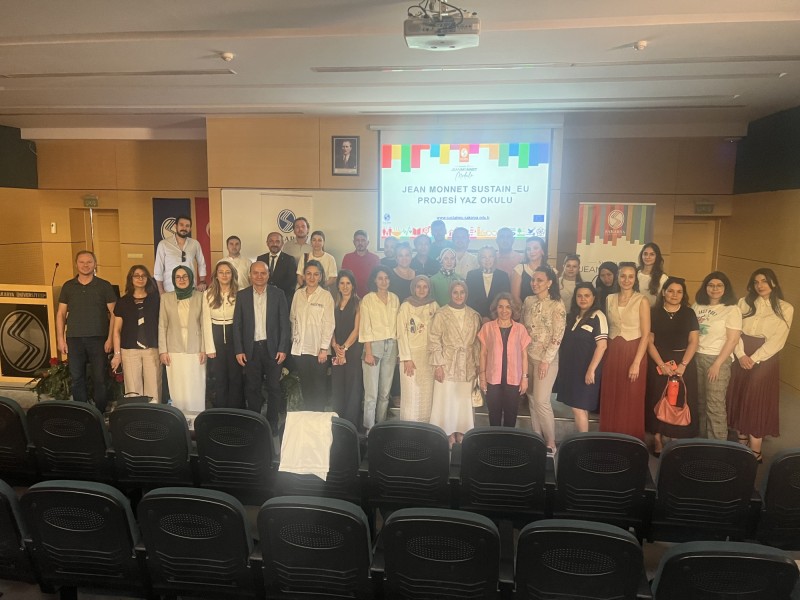
Jean Monnet SUSTAIN_EU Summer School — program report. The four-day program examined the environmental, social and educational dimensions of sustainability within the SDG framework, with training delivered by eleven academic staff members. Interactive teaching methods and group work were used to encourage participants to share their knowledge and experience, and successful participants were awarded 3 ECTS certificates. The summer school contributed to the wider dissemination of sustainability education and to strengthening collaboration between the University and the local education community.

SDG Introductory Lecture (2025). Assoc. Prof. Dr. Gözde Sezen Gültekin delivered the project's first presentation on the SDGs. The first part covered all 17 Goals — poverty, social equality, environmental sustainability and the principles of sustainable development; the second part focused on SDG 4 (Quality Education) through active student discussion on education's role in building a sustainable society.

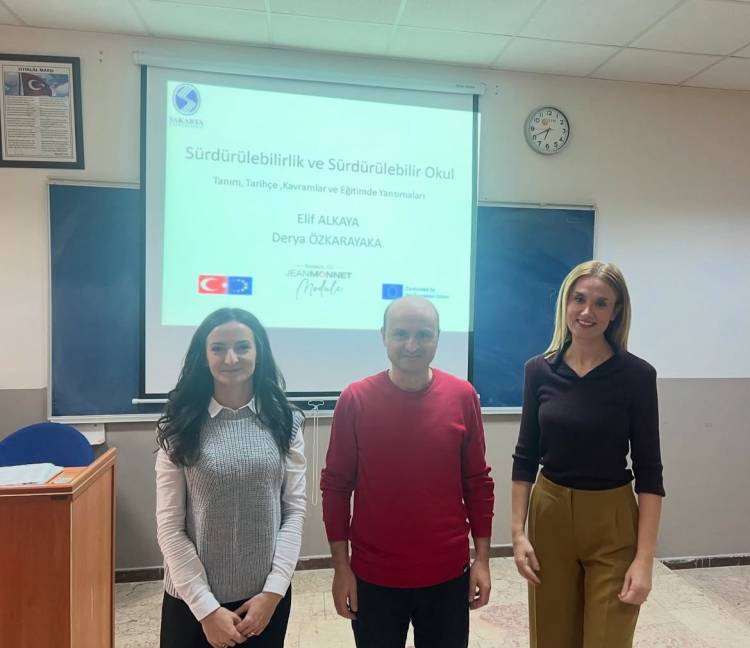
Sustainability and Sustainable Schools (2025). Elif Ayanoğlu Alkaya and Derya Özkarayaka covered the fundamental principles of sustainability, international and EU-level sustainability initiatives, and sustainable school practices, followed by a student discussion on integrating sustainable development into educational processes and building sustainable learning environments.
Sustainability and Inclusion in Early Childhood (2025). Assoc. Prof. Dr. Zeynep Dere (Ege University) addressed education for sustainable development, the environmental, social and economic dimensions of sustainability and inclusive early-childhood practice, emphasizing environmental awareness, social responsibility, empathy and collaboration from an early age.
Sustainability Literacy
Sustainability Literacy and Awareness Assessment
Sakarya University monitors and evaluates sustainability literacy and awareness among its students and staff as part of its institutional commitment to sustainable development and continuous improvement.
The University approaches sustainability literacy not only as knowledge of environmental issues and the United Nations Sustainable Development Goals (SDGs), but also as the ability to recognise sustainability challenges, understand institutional practices and translate this knowledge into responsible everyday decisions. To support this approach, the Sakarya University Social Contribution and Sustainability Coordinatorship (TOKAS) developed the Sakarya University Sustainability Literacy and Awareness Test, an institutional assessment designed to measure sustainability-related knowledge, campus awareness, environmental attitudes and everyday sustainable behaviours.
The assessment provides a structured framework for identifying participants' levels of understanding and awareness and for examining how sustainability principles are reflected in daily practices.
Assessment Framework and Measurement Areas
The Sustainability Literacy and Awareness Test evaluates four principal dimensions:
1. Global Sustainability Knowledge
This dimension examines participants' understanding of fundamental sustainability concepts and global environmental challenges. Assessment topics include sustainable development, climate change, biodiversity conservation, zero waste and the relationship between environmental protection and responsible resource management.
It focuses on participants' knowledge of sustainability principles and their relevance to contemporary environmental and societal challenges.
2. Campus Sustainability Awareness
This dimension assesses students' and staff members' awareness of sustainability initiatives and environmental management practices implemented at Sakarya University. It examines participants' familiarity with campus activities and institutional measures related to energy conservation, waste management, resource efficiency and environmental responsibility.
This component helps identify how effectively the University's sustainability practices are recognised by its campus community.
3. Environmental Attitudes and Awareness
This dimension evaluates participants' attitudes towards environmental protection, conservation of natural resources and individual responsibility for sustainability. It considers environmental sensitivity, awareness of the consequences of resource consumption and the importance attributed to sustainable choices. The assessment therefore examines attitudes and perceptions alongside knowledge of sustainability concepts.
4. Sustainable Behaviour and Everyday Practices
This dimension focuses on how sustainability principles are reflected in participants' daily activities.
The assessment addresses practices such as:
By examining these behavioural aspects, the University seeks to understand the relationship between sustainability awareness and everyday actions.
Implementation in 2025 and Publication of Results in 2026
The Sakarya University Sustainability Literacy and Awareness Test was administered in 2025, providing an institutional assessment of sustainability knowledge, awareness, attitudes and behaviours among participating students and staff. The results of the 2025 assessment were shared in 2026, establishing a documented assessment process within the University's sustainability monitoring activities.
The assessment remains open to student and staff participation and is administered annually to support the continued monitoring of sustainability literacy and awareness. This recurring approach is intended to facilitate the identification of changes in knowledge, environmental awareness and sustainable behaviour over time.
The assessment framework, its implementation and the reporting arrangements are documented on the official Sustainability Literacy and Awareness Assessment page of the Social Contribution and Sustainability Coordinatorship (TOKAS).
The official page also provides access to the Sakarya University Sustainability Literacy and Awareness Test and related assessment documentation.
Evaluation of Sustainability Education and Awareness Activities
In addition to the institution-wide literacy assessment, Sakarya University conducts participant feedback surveys following sustainability-related educational events organised by TOKAS.
These surveys collect participants' evaluations of event content, the extent to which activities meet expectations and their perceived contribution to sustainability awareness. Event-level feedback and the Sustainability Literacy and Awareness Test serve complementary purposes.
While event surveys provide information about individual educational activities and participants' experiences, the Sustainability Literacy and Awareness Test offers a broader assessment of sustainability knowledge, campus awareness, environmental attitudes and everyday practices. Together, these assessment approaches support the University's efforts to evaluate its sustainability education and awareness activities.
Information about the assessment processes is available through the TOKAS Sustainability Literacy and Awareness Assessment.
Monitoring and Continuous Improvement
Sakarya University uses sustainability literacy assessment as a framework for identifying educational needs and supporting the continued development of its sustainability initiatives. The annual assessment process is intended to inform the planning of educational programmes, awareness activities and campus sustainability communication by providing information about participants' knowledge, attitudes and reported behaviours.
The results can help identify areas in which further awareness-raising or educational activities may be beneficial. By integrating sustainability literacy assessment into its institutional monitoring approach, Sakarya University aims to strengthen the relationship between sustainability education, campus practices and individual responsibility.
Etiketler :
