Yayın Tarihi: · Son Güncelleme:
Sakarya University aims to enhance students' knowledge, awareness and competence in sustainable development by aligning its educational and teaching activities with the United Nations Sustainable Development Goals (SDGs). The University adopts an interdisciplinary educational approach that addresses sustainability in its environmental, economic and social dimensions. In line with this, compulsory and optional courses offered at undergraduate, postgraduate and doctoral levels support students in understanding the fundamental principles of sustainable development and developing solutions to global challenges.
Courses directly related to sustainable development within the University's educational programs cover a wide range of topics, including climate change, renewable energy, the sustainable management of water resources, the prevention of environmental pollution, waste management, the conservation of biodiversity, sustainable production and consumption, the green economy and sustainable social policy. In these courses, which are offered across various disciplines, theoretical knowledge is supplemented by project work, laboratory practicals and field trips to develop students' sustainability-focused analytical and problem-solving skills.
Sakarya University also supports sustainability education through international projects and specialized training programs. Within the framework of the SUSTAIN_EU Project, carried out under the European Union's Jean Monnet Program, various training sessions have been organized on the Sustainable Development Goals, sustainable schools, environmental education, climate awareness, sustainable food production, inclusive education and the role of digital technologies in sustainability. A total of 80 participants – comprising 30 teachers and 50 university students – took part in the summer school organized under the project on the theme of 'Sustainable School – Sustainable Society', and certificates worth 3 ECTS credits were awarded to those who completed the program. Sakarya University continues its efforts to disseminate knowledge on sustainable development, strengthen students' awareness of environmental and social responsibility, and nurture individuals capable of contributing to a sustainable future through sustainability-focused courses and practical educational activities.
| Code | Type | Course Title | SDG | Course Summary |
|---|---|---|---|---|
| SAU 555 | Electives | Sustainability | 1–17 (All SDGs) | The course examines the environmental, economic and socio-cultural dimensions of sustainability within the framework of the United Nations’ 17 Sustainable Development Goals. Topics such as poverty, inequality, health, education, clean energy and climate change are explored, supported by student research and report projects. |
| SAU 044 | Electives | Ecology, Science and Sustainability | 12, 13, 14, 15 | This course examines the fundamental concepts of ecology and environmental sciences from a sustainability perspective. The structure and functioning of ecosystems, biodiversity, climate change and the impacts of human activities on the natural environment are assessed through data analysis and applied projects. |
| ULI 438 | Electives | Global Environmental Policies and Sustainable Development | 10 | This course examines the formulation and implementation of global environmental policies within the framework of sustainable development. International environmental agreements, the green economy, social justice and natural resource management are assessed in the context of environmental diplomacy and international cooperation. |
| MIM 008 | Electives | Global Climate Change | 11,13 | This course examines the scientific, environmental, economic and political dimensions of global climate change from the perspective of sustainable development. Greenhouse gas emissions, the impacts of climate change on ecosystems, urbanization and public health and international agreements and adaptation policies are examined. |
| SAU 013 | Electives | Environment and Energy | 7, 12, 13 | The course examines the environmental impacts of energy production and consumption from a sustainability perspective. Pollution from fossil fuels is compared with that from solar, wind, hydroelectric, geothermal and biomass energy, within the framework of energy efficiency and national and international energy policies. |
| EEM 470 | Electives | Renewable and Sustainable Energy | 7, 12, 13 | This course examines renewable and sustainable energy sources from an engineering perspective. The life cycles and environmental impacts of renewable sources are examined in comparison with fossil fuels, alongside energy and environmental law and mitigation measures. |
| BIY 215 | Electives | Environmental Problems and Solutions | 3, 6, 12, 13, 14, 15 | The course examines current environmental issues from the perspective of sustainable development, taking into account their ecological, social and economic dimensions. Air, water and soil pollution, loss of biodiversity, waste management and climate change are assessed alongside proposed solutions within the framework of their impacts on human health, environmental law and environmental ethics. |
| CVM 403 | Compulsory | Life Cycle Analysis | 9, 12, 13 | This course covers methods for assessing the environmental impacts arising throughout the life cycle of products and processes. The stages of defining system boundaries, compiling inventories, assessing impacts and interpreting results, as set out in ISO 14040 and ISO 14044, are examined through practical applications. |
| CVM 309 | Compulsory | Solid Wastes and Control | 11, 12, 13 | This course examines waste management methods for controlling the environmental impacts of solid waste from a sustainable development perspective. The classification and characterization of waste, collection and transport systems, landfill design and composting, biomethanisation and incineration processes are examined. |
| CVM 307 | Compulsory | Air Pollution and Control | 3, 4, 6, 7, 8, 9, 10, 11, 14, 15 | The course addresses the sources of air pollution, its effects on human health and the environment, and engineering solutions for pollution prevention. Pollutant measurement and modeling, particulate and gaseous separation technologies, and national legislation and international agreements are evaluated together. |
| CVM 302 | Compulsory | Water Treatment | 6 | This course examines water treatment methods to provide safe, clean drinking water from a sustainable water management perspective. Water quality standards; aeration, coagulation-flocculation, sedimentation, filtration and disinfection processes; and plant design and sizing are examined through practical applications. |
| CVM 308 | Compulsory | Collection and Disposal of Wastewater | 6,11 | This course examines infrastructure systems for the safe collection and disposal of wastewater and rainwater from the perspective of sustainable water and environmental management. The design of sewer networks, hydraulic calculations and urban drainage applications are assessed in conjunction with the principles of project planning. |
| CVM 310 | Compulsory | Treatment of Wastewater | 3,6,14 | This course examines treatment methods to reduce the adverse effects of wastewater on the environment and human health from a sustainable water management perspective. Physical and biological treatment processes, activated sludge systems, nutrient removal and alternative technologies, and plant design and sludge management are examined. |
| CVM 337 | Electives | Environmental Health Management | 1, 3, 6, 7, 9, 11, 12,13, 15 | This course examines the effects of environmental pollution on human health and working life from the perspective of sustainable environmental and public health management. Risks arising from air, water, solid waste, radiation and noise are assessed in the context of occupational diseases, preventive health approaches and occupational health and safety responsibilities. |
| CVM 450 | Electives | Disinfection By-Products in Drinking Water and Their Control | 3.6 | This course examines the effects of by- products formed during drinking water disinfection on human health and water quality from the perspective of sustainable water management. Chloramine, ozone and UV applications, the role of natural organic matter in trihalomethane formation and relevant standards are examined within the framework of advanced oxidation, membrane and adsorption processes. |
| CVM 429 | Electives | Advanced Treatment Systems | 2,3,4,6,7,12,14 | The course examines advanced technologies for water and wastewater treatment from the perspective of sustainable water management and environmental protection. The design principles of advanced biological treatment, membrane bioreactors, adsorption, ion exchange and advanced oxidation processes for pollutants that cannot be removed by conventional methods are examined. |
| BIY 319 | Electives | Limnology | 6.15 | This course examines the structure, functioning and conservation of lakes, rivers and other freshwater ecosystems from the perspective of sustainable water resources management. The physical, chemical and biological characteristics of inland waters, food chains and energy flow, as well as the ecological impacts of pollution, are examined and supported by field studies. |
| MKM 469 | Electives | Power Plants | 7.13 | This course examines energy production technologies based on renewable energy sources from a sustainable development perspective. Topics such as resource characteristics, system design, capacity and efficiency calculations and energy security and conservation are assessed. |
| Code | Type | Course Title | SDG | Course Summary |
|---|---|---|---|---|
| CEM 527 | Electives | Sustainable and Integrated Water Resources Management under Climate Change | 6, 13, 14, 17 | The course examines the impacts of climate change on water resources and approaches to their sustainable, integrated management. The effects on lakes, groundwater, wetlands and agricultural irrigation, as well as threats to water security, are assessed within the framework of the national climate action plan and the national water plan. |
| CEM 523 | Electives | Global Plastic Pollution and Sustainability | 3, 9, 12, 14, 15 | This course examines the environmental, ecological and social impacts of global plastic pollution from a sustainable development perspective. Microplastic pollution and the associated risks to ecosystems and human health are assessed in the context of recycling, the circular economy, sustainable material alternatives and national and international policies. |
| CEM 518 | Electives | Global Climate Change | 11, 13, 17 | The course examines the scientific, environmental, economic and political dimensions of global climate change from the perspective of sustainable development. It explores greenhouse gas emissions, the impacts of climate change on ecosystems and cities, international climate agreements and mitigation and adaptation policies. |
| ELK 503 | Electives | Energy Efficiency in Lighting | 7, 9, 11 | This course examines the technology, design methods and applications aimed at improving energy efficiency in lighting systems from the perspective of sustainable energy management. Efficient equipment, lighting automation, simulation and economic evaluation calculations are examined in the context of applications at residential, public, office, industrial and urban scales, as well as in relation to light pollution. |
| ISG 513 | Electives | Industrial Pollution and Control | 8, 9, 12, 13 | This course examines methods for preventing and controlling environmental pollution arising from industrial activities, from the perspective of sustainable production and environmental management. Waste minimization, recycling and recovery technologies are assessed in conjunction with environmental management systems, risk assessment, occupational health and safety practices, and relevant legislation. |
| CEM 512 | Electives | Bioenvironmental Engineering | 6, 7, 9, 12 | This course addresses biotechnological methods for preventing environmental pollution, recovering waste and managing resources sustainably. The biological treatment of domestic, industrial, agricultural and hazardous waste; biodegradation, biosorption, biotransformation and composting processes; and biogas production and energy recovery are examined. |
| CEM 545 | Electives | Biotechnology Applications in Water and Wastewater Treatment | 6, 9, 12 | The course examines biotechnological methods used in water and wastewater treatment from the perspective of sustainable water management and environmental protection. Microbiological and biochemical processes, growth and enzyme kinetics, the design of activated sludge systems, and aerobic-anaerobic treatment mechanisms are examined alongside laboratory-scale reactor applications. |
| CEM 551 | Electives | Surface Water Quality Modeling | 6,15 | This course examines modeling methods for assessing and protecting surface water resources, such as rivers and lakes, from a sustainable water management perspective. Water quality standards, reaction kinetics, mass balance, dissolved oxygen and eutrophication processes are examined through computer-aided models and applied studies. |
| Code | Type | Course Title | SDG | Course Summary |
|---|---|---|---|---|
| CEM 612 | Electives | Risk Assessments in Water Management and Climate Change | 6, 13, 15 | The course examines the impacts of climate change on water resources and ecosystems from the perspective of sustainable water management and environmental risk assessment. The water cycle, water quality and ecological risk assessment methods are examined within the framework of climate models, risk analysis applications and case studies. |
| CEK 617 | Electives | Green Economy and Sustainable Social Policy | 1, 5, 8, 10, 11 | The course examines the links between the green economy and sustainable social policy from economic, social and environmental perspectives. The theoretical foundations of the green economy and the role of social policies in environmental transformation are assessed through the prism of employment, poverty, housing, transport, health, education and gender policies. |
| ELK 610 | Electives | Clean Energy | 7, 9, 11, 13 | This course examines the use of clean and renewable energy sources, their environmental impacts and sustainable energy technologies from the perspective of combating climate change. Solar, wind, geothermal, hydroelectric, biomass and hydrogen energy, as well as fuel cells, are examined in the context of greenhouse gas reduction, energy conservation and international energy legislation. |
| CEM 617 | Electives | Water Efficiency in Industry and Water Footprint | 6, 9, 12 | This course addresses the efficient use of water resources in industrial production processes and sustainable water management approaches. Industrial water consumption, catchment management, water footprint calculations, water conservation and the recovery and reuse of wastewater are assessed alongside production approaches aimed at achieving zero water consumption. |
| CEM 607 | Electives | Advanced Oxidation Systems for Water and Wastewater Treatment | 3,6,9 | This course examines advanced oxidation technologies used in water and wastewater treatment from the perspective of sustainable water management and environmental protection. The formation mechanisms of hydroxyl radicals, along with ozonation, Fenton, photochemical and sonochemical oxidation methods, are examined within the framework of domestic and industrial wastewater applications and cost analyses. |
| CEM 604 | Electives | Use of Sewage Sludge in Agriculture | 2,12,15 | The course examines the safe and sustainable use of sewage sludge in agriculture from the perspectives of waste recovery and soil resource conservation. Sludge composition and quality criteria, agricultural application methods, risks associated with heavy metals and organic pollutants, environmental risk assessment and relevant legislation are examined within this context. |
Since 2025, Sakarya University has delivered a series of courses on sustainability and the SDGs, beginning with a summer school and continuing with a set of lectures for students, all carried out within the scope of the SUSTAIN_EU Project under the European Union's Jean Monnet Program.
Jean Monnet SUSTAIN_EU Summer School — "Sustainable School – Sustainable Society" (23–26 June 2025). A four-day, free-of-charge program held at the Culture and Congress Center on the Esentepe Campus, with 80 participants from different academic disciplines: 30 teachers working in Sakarya and 50 university students. Sessions covered the UN SDGs, sustainability literacy, environmental education, climate awareness, disaster literacy, sustainable food production and dietary habits, the effects of climate change on mental health, sustainable assessment and evaluation, and student-centered learning approaches. Participants who completed the program received certificates worth 3 ECTS.
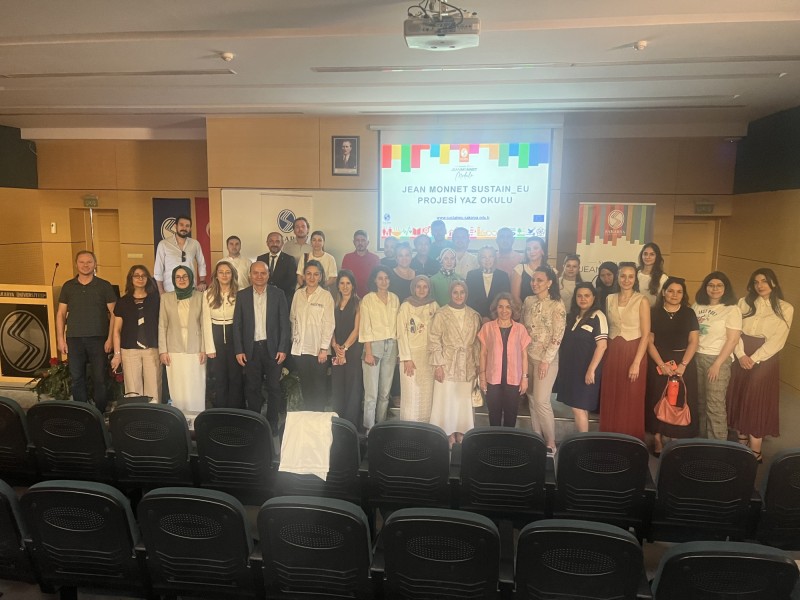
Jean Monnet SUSTAIN_EU Summer School — program report. The four-day program examined the environmental, social and educational dimensions of sustainability within the SDG framework, with training delivered by eleven academic staff members. Interactive teaching methods and group work were used to encourage participants to share their knowledge and experience, and successful participants were awarded 3 ECTS certificates. The summer school contributed to the wider dissemination of sustainability education and to strengthening collaboration between the University and the local education community.

SDG Introductory Lecture (2025). Assoc. Prof. Dr. Gözde Sezen Gültekin delivered the project's first presentation on the SDGs. The first part covered all 17 Goals — poverty, social equality, environmental sustainability and the principles of sustainable development; the second part focused on SDG 4 (Quality Education) through active student discussion on education's role in building a sustainable society.

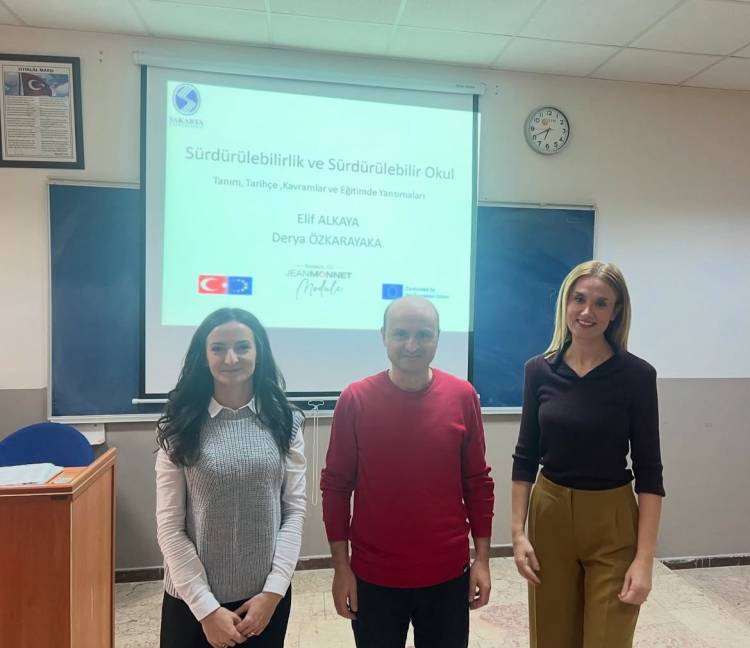
Sustainability and Sustainable Schools (2025). Elif Ayanoğlu Alkaya and Derya Özkarayaka covered the fundamental principles of sustainability, international and EU-level sustainability initiatives, and sustainable school practices, followed by a student discussion on integrating sustainable development into educational processes and building sustainable learning environments.
Sustainability and Inclusion in Early Childhood (2025). Assoc. Prof. Dr. Zeynep Dere (Ege University) addressed education for sustainable development, the environmental, social and economic dimensions of sustainability and inclusive early-childhood practice, emphasizing environmental awareness, social responsibility, empathy and collaboration from an early age.